
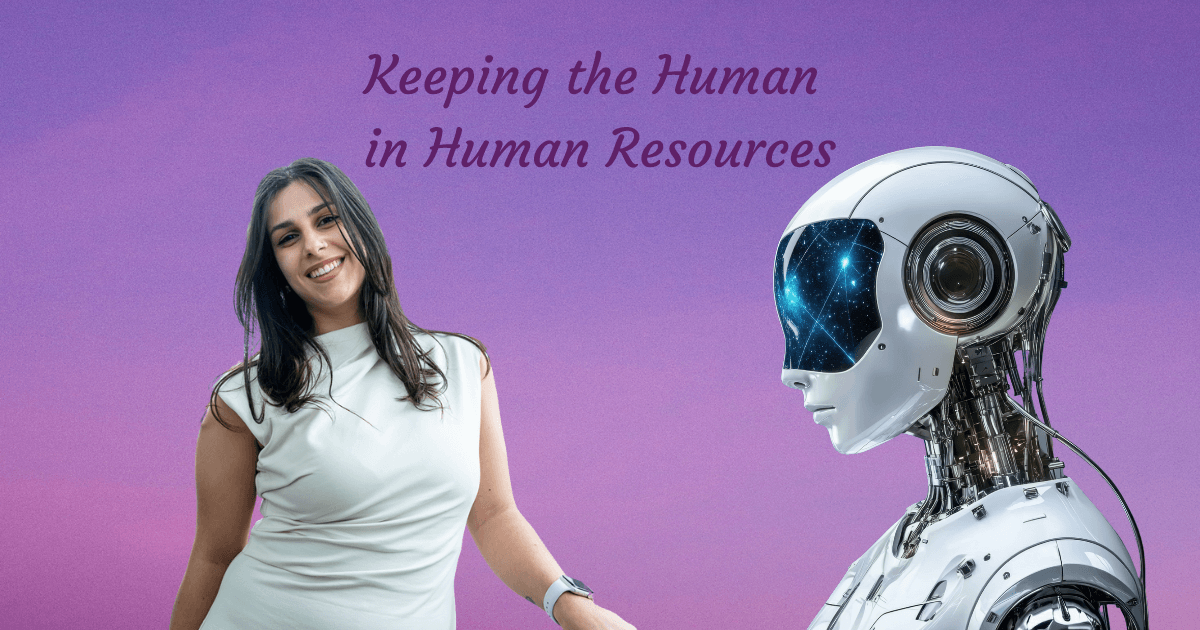
“Why can’t I just ask ChatGPT instead of paying for HR support?”
If you’re running a small business or charity in the UK, you’ve probably thought it. AI tools like ChatGPT are everywhere, promising instant answers to everything from writing your policies to handling tricky employee issues. They’re fast, cheap (or even free) and getting smarter every day.
So, is there really any point in paying for human HR support? In this article, we’ll show you the exact scenarios where AI falls short, and why relying on human HR advice could save you from costly mistakes, legal risks and reputational harm.
At DOHR, we’re an HR practice dedicated to helping UK employers get things right with their people – legally, practically and commercially. We’ve been asked more times than we can count whether AI can replace a human HR advisor.
The short answer: AI is a useful tool, but it cannot replace a human HR professional.
Let’s explore why.
1. Can AI Handle Complex Employment Law Issues?
AI Gives You The Law – But Not Your Context
ChatGPT and other AI models can tell you what the law says. For example, if you ask:
“What’s the statutory redundancy pay for an employee in the UK with five years’ service?”
You’ll get the correct statutory calculation. Brilliant.
But here’s the catch:
- Employment law is only a minimum standard.
- Beyond the law lie case law interpretations, codes of conduct, best practice and, crucially, your business’s own policies, culture and risk appetite.
Real-life HR decisions sit in that messy space between the legal minimum and what’s right for your business.
Case Study: A Redundancy Scenario
Imagine you’re making redundancies.
- The law says you must consult with affected staff, follow fair selection procedures, and pay statutory redundancy pay if eligible.
- Case law tells you how to handle pools, scoring and selection fairly.
- ACAS codes of practice add more guidance.
- Your own redundancy policy might offer enhanced terms.
- Your company values talk about respect and integrity.
- Your financial situation influences whether you can afford to offer more generous packages.
Ask AI how to handle a redundancy, and it might tell you:
“Follow a fair process, consult employees and pay statutory redundancy pay.”
That’s accurate … but it’s not enough.
A human HR advisor will:
✅ Understand the nuances of your business and industry.
✅ Ask the right questions about your circumstances.
✅ Balance legal requirements with your commercial priorities.
✅ Help you craft communications that protect relationships and reputation.
✅ Keep you compliant and reduce the risk of costly tribunal claims.
2. Can AI Understand Employee Nuance?”
AI Doesn’t “See” Human Nuance
AI is brilliant for quick statutory lookups but lacks the nuance for complex people issues.
Your people aren’t widgets on a production line. Each employee brings:
- Individual personalities and life experiences
- Health conditions or neurodiversity that may be hidden
- Different reactions to management styles
- Personal challenges outside work
AI cannot pick up those signals. It can’t hear someone’s tone of voice. It can’t spot when an employee looks tearful in a meeting. It won’t know your team’s history of past disputes, management styles, or how certain actions might affect morale.
Example: A Sickness Absence
Say an employee has been off sick for eight weeks with stress.
- AI might tell you:
“Consider a welfare meeting, ask for medical evidence, explore reasonable adjustments and follow your absence policy.”
That’s legally correct.
But a human HR advisor will dig deeper:
- Is this employee’s absence linked to workplace bullying or workload?
- Is there a disability issue raising the duty to make reasonable adjustments?
- Has the manager’s approach been a factor in the absence?
- How is the wider team coping?
- What’s the risk of a constructive dismissal or discrimination claim?
Those are nuanced human factors that simply do not appear in an AI model’s answer.
3. Is There a Risk of Discrimination Claims?
AI Can’t Make Judgement Calls About Risk
Many HR decisions carry potential discrimination risks.
Take these examples:
- Telling a menopausal employee to “pull herself together”
- Giving feedback to an autistic employee in a way that triggers anxiety
- Dismissing a disabled employee for poor performance without exploring adjustments
- Disciplining someone for absence without considering hidden mental health conditions
These situations are rarely black-and-white. The difference between a fair dismissal and a six-figure discrimination claim often comes down to:
- The words you choose in conversations and letters
- The evidence you keep
- How consistent you are with other employees
- Your willingness to explore reasonable adjustments
AI can’t reliably help you navigate these subtle risks. It can tell you the law, but it can’t judge your business’s risk appetite, nor can it detect the tone or nuance of a conversation.
AI and Discrimination – A Data Problem
There’s another risk too:
- AI’s answers are trained on existing data, which may carry unconscious bias.
- AI’s answers are an average, an amalgamation of information available on the internet.
- AI doesn’t know your specific employee’s medical details, protected characteristics, or personal history. It can’t ask follow-up questions unless you tell it more and sharing personal employee data with an AI tool raises serious data protection concerns.
4. Can AI Accomodate Company Culture, Values and Policies?
AI Doesn’t Know Your Business Culture
Every business has unique values:
- A creative agency might value flexibility, humour and informal communication.
- A care home might prioritise dignity, compassion and safeguarding.
- A manufacturing firm might focus on productivity, compliance and safety.
These values influence:
- How you manage people
- How generous you are with policies
- How you handle disciplinaries and grievances
- The type of employer brand you want to build
AI cannot tailor its answers to your culture unless you explicitly tell it your values every time. Even then, it can’t “feel” whether a piece of advice fits your tone.
A human HR advisor, on the other hand, gets to know your business deeply. They:
✅ Understand your brand voice.
✅ Help you stay consistent with your values.
✅ Ensure your policies and processes reinforce, rather than undermine, your culture.
5. Cost vs. Value: The Commercial Decision
AI Is Cheap … But Mistakes Are Expensive
There’s no denying that AI is cost-effective. But let’s talk about risk.
A mistake in HR can cost you:
- Legal fees (£200 + per hour for employment lawyers)
- Settlement agreements (often £5,000–£50,000+ to avoid tribunal claims)
- Tribunal awards (unlimited for discrimination, which will almost always be added to a claim if at all possible)
- Damage to your reputation
- Loss of key staff and morale
- A sap on your time and energy
Small businesses and charities often think:
“I can’t afford HR advice.”
The reality? You often can’t afford not to.
A human HR advisor:
✅ Spots issues before they become claims.
✅ Helps you resolve matters early and amicably.
✅ Tailors advice to your budget and risk appetite.
✅ Saves you money in the long run by reducing legal exposure.
Example: A Grievance Gone Wrong
An employee raises a grievance about bullying.
AI might advise:
“A grievance should be investigated fairly, following your policy.”
All true. But what if:
- The accused manager is your only senior operations person?
- The employee says it’s disability harassment?
- You’ve had a similar grievance six months ago from another person?
Handling it badly risks a tribunal claim for harassment, victimisation and constructive dismissal. Settlements could be tens of thousands of pounds.
A human HR advisor:
- Guides you on whether to suspend the manager
- Advises how to investigate impartially
- Helps you protect evidence
- Coaches you on communication to avoid making matters worse
- Considers the reputational impact
- Balances legal compliance with commercial practicalities
6. Can AI Protect Data and Confidentiality?
Sharing Data With AI Tools Is Risky
One critical issue many business owners overlook:
- When you type personal employee details into an AI tool, you’re processing personal data.
- Depending on how the AI provider stores or uses that data, you could breach the UK GDPR.
- AI tools often disclaim liability for advice.
Good human HR advisors:
✅ Understand UK data protection laws.
✅ Keep your sensitive employee data safe.
✅ Are bound by professional confidentiality.
7. Human HR Advice Is Personalised, Strategic and Proactive
Finally, human HR support is:
- Proactive: Spotting risks before they become crises
- Commercial: Balancing law with cost, brand and culture
- Strategic: Helping you grow a sustainable business
- Empathetic: Supporting you emotionally through stressful situations
- Tailored: Knowing your business inside out
AI can produce words on a screen. It can’t stand beside you in a disciplinary hearing, negotiate with a trade union, or help you rewrite your culture handbook to reflect your company values.
DOHR vs. AI: The Verdict
So, should you use AI for HR?
✅ Use AI for simple information:
- What’s the statutory minimum notice period?
- How many days of holiday does an employee get?
- What is TUPE?
But always check it is the most up to date version when asking for figures which change on an annual basis, such as National Minimum Wage or Statutory Redundancy Pay.
❌ Don’t rely on AI for people problems:
- Disciplinaries and grievances
- Redundancies
- Sickness absence and disability
- Discrimination risks
- Drafting bespoke contracts and policies
- Making commercial decisions linked to your business values and risk appetite
Human HR support:
- Understands nuance, culture, and context
- Protects you legally and commercially
- Helps you avoid costly mistakes
- Gives you peace of mind
At the end of the day, AI can be a brilliant tool for quick HR facts. But it simply can’t handle the nuance, risk and human dynamics your people challenges demand. If you’re worried about relying on AI alone, remember: the cost of a tribunal claim can far outweigh any savings. At DOHR, we’ve helped hundreds of UK businesses navigate these tricky HR waters safely and affordably. Your next step? Let’s talk. Schedule a free discovery call, and we’ll help you figure out the best mix of human and AI support for your business.