
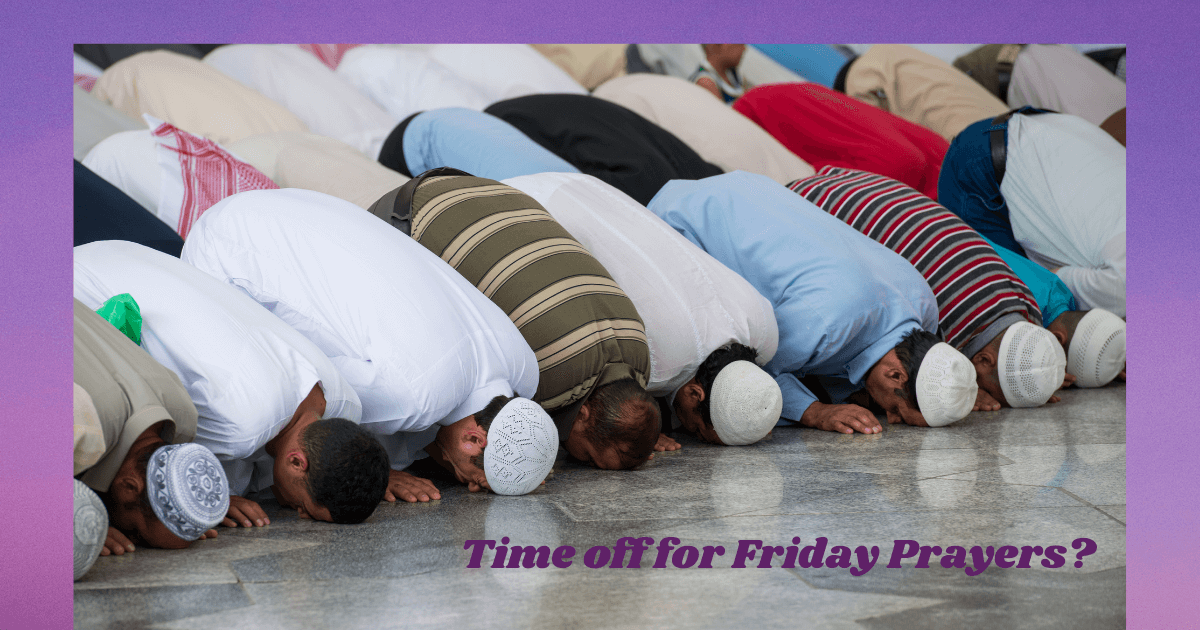
Can UK employers refuse time off for Muslim employees attending Jumu’ah?
What counts as a “reasonable” religious accommodation under UK law?
Balancing faith-based time-off requests with operational needs is a challenge for many SME employers. In this article, we’ll break down what the law says, what religious obligations entail and how you can handle requests in a fair and legally robust way.
You’ll leave with clear next steps and confidence in managing Friday prayer requests in your business.
What Does UK Law Say About Time Off for Religious Practices?
Under the Equality Act 2010, UK employers are legally required to avoid discrimination on the basis of religion or belief. This includes being open to reasonable adjustments that accommodate religious practices, such as Muslim employees requesting time off to attend Friday Jumu’ah prayers.
While the law doesn’t provide an absolute right to religious time off, refusing such requests without proper consideration could amount to indirect discrimination. A blanket rule like “no leaving during working hours” may disproportionately affect Muslim staff, unless the policy can be justified as a proportionate means of achieving a legitimate business aim, such as safety or essential operations.
What Are the Religious Obligations Around Friday Prayers?
For practising Muslims, Jumu’ah (Friday) prayers are of deep religious importance. Unlike daily prayers which can often be performed individually, Jumu’ah must be observed in congregation at a mosque, typically between 12:30–2:00pm, depending on the season.
This may require:
- Leaving work temporarily
- Taking an extended or shifted lunch break
- Having access to a nearby mosque or prayer space
For devout Muslims, missing Jumu’ah is not merely inconvenient, it is a serious religious matter. Employers who understand this context are better positioned to respond respectfully and appropriately.
What Is a Reasonable Adjustment for Friday Prayers?
The law focuses on “reasonableness,” not obligation, especially for small or resource-limited businesses. Here’s what “reasonable” could look like:
- Flexible Hours: Can the employee take a longer lunch break and make up the time before or after?
- Shift Adjustments: Can team rotas be adjusted to allow coverage during prayer time?
- Location Logistics: How far is the mosque? If significant travel is needed, can a compromise be reached?
- Operational Impact: Will their absence at that time cause genuine business disruption or can it be managed?
Being “reasonable” means finding a solution that respects both the business needs and the employee’s faith.
Unlimited time off isn’t reasonable, but neither is flatly denying requests without discussion.
Friday Prayer Time Requests: What Should Employers Do in Practice?
Here’s how you can handle requests fairly and consistently:
- Have an open conversation
- Understand your employee’s needs and explore options together.
- Apply policies consistently
- If flexibility is offered for one religion or situation, similar logic should apply to others.
- Document the decision
- Whether approving or declining, ensure decisions are written down with clear, business-based reasoning.
- Review your policies
- Blanket rules in handbooks or schedules may unintentionally violate equality laws. Review your flexible working and equality policies regularly.
Striking the Right Balance as an SME Employer
We get it. For a small team, losing an employee for even 45–60 minutes on a Friday can feel like a stretch. But when you show good faith and a willingness to accommodate religious needs:
- You comply with the law
- You strengthen employee trust
- You help foster a diverse and inclusive workplace culture
You’re not required to say “yes” to every request, but you are required to give each one serious, fair consideration.
Key Takeaway
You don’t have to grant every Friday prayer request, but you must approach each one with care. Under the Equality Act 2010, employers are expected to explore reasonable adjustments before refusing.
The best outcomes often come from collaborative, flexible planning, not rigid policies or assumptions.
Next Steps for Employers
✅ Review your equality and flexible working policies
🤝 Speak with employees openly about faith-based needs
📘 Consult with HR if you’re unsure – Every case depends on context, resources and operational realities
Looking for More Guidance on Religious Accommodations?
Check out our related articles:
👉 Do I need to provide a prayer room for my employees?
👉 Ramadan and its potential impact on your staff and your business
Need help creating inclusive, legally sound HR policies?
📞 Get in touch with our HR advisors today.
Quick Fire FAQ
Do Muslim employees have a legal right to time off for Friday prayers?
Not automatically. While there’s no absolute legal right, employers must consider reasonable accommodations under the Equality Act 2010. Blanket refusals without proper justification could be seen as indirect discrimination.
What counts as a “reasonable” adjustment for Friday prayer?
A reasonable adjustment might include:
- Allowing an extended lunch break
- Letting the employee make up time later
- Adjusting shift patterns or rotas
What’s reasonable depends on your business size, resources and operational needs.
Can I refuse a request for Friday prayer time off?
You can refuse, but only if you have a legitimate business reason and have first explored possible accommodations. The refusal must be proportionate and documented.
How long do Friday prayers usually take?
Jumu’ah prayers typically take 45 to 60 minutes, including travel. This may vary based on the location of the mosque and timing during the year.
Should religious accommodations be included in company policies?
Yes. Including a section on religious observance and flexible working in your handbook helps ensure consistency, fairness and legal compliance.